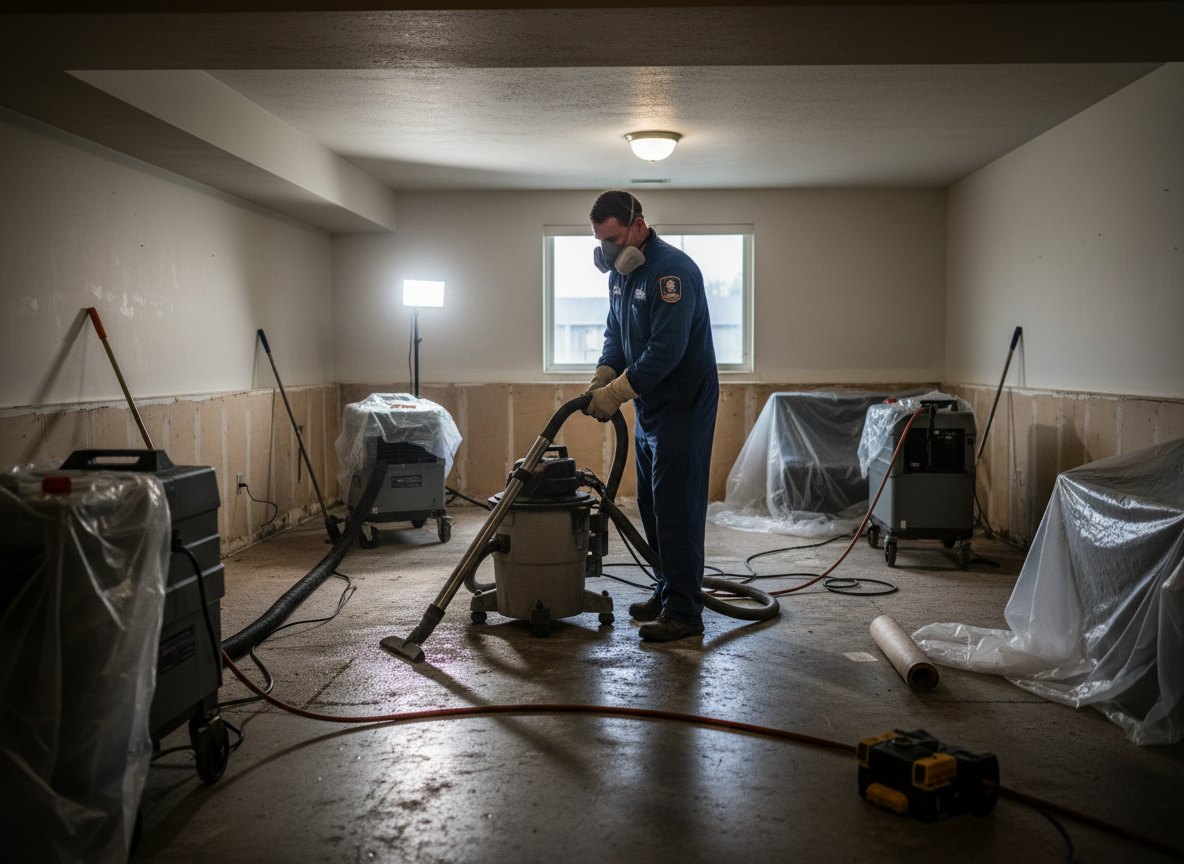
Wichita homes built before 1970 in Delano and Old Town often have plaster walls and crawl spaces that trap moisture after a burst pipe or heavy rain. Hot humid summers speed mold growth on wood framing while cold winters freeze and crack supply lines in unheated basements. Tornado season adds sudden roof breaches that send water through ceilings in College Hill and Eastborough. Extraction crews must account for the clay-heavy soil that slows natural drainage around foundations in Planeview and Riverside.
Sedgwick County properties near the Arkansas River see repeated groundwater seepage during spring storms. Older brick homes in the historic districts require slower drying rates to avoid cracking mortar joints. Technicians use moisture meters on subfloors because carpet pad and hardwood in these houses hide water that later warps boards. Nearby Park City and Bel Aire ranches built on slabs need perimeter drilling to reach trapped moisture under the concrete.
Derby and Bel Aire residents call after sewer backups during heavy summer downpours when city lines back up into basements. Restoration teams remove affected drywall up to the flood line and treat joists with antimicrobial solutions suited for humid conditions. Work stops only after readings show under 15 percent moisture content to prevent hidden rot in the next freeze cycle.
Technician insight
In Wichita the thing that catches most people out with water damage restoration is the clay soil around older Delano and College Hill foundations. It holds water against the sill plate long after the carpet feels dry, so hidden rot shows up the next winter when pipes freeze again.
Riverside Basement After Summer Storm
Heavy rain pushed river water into a 1950s Riverside home through the foundation. Crews found saturated joists and carpet pad hidden under finished flooring. Extraction and targeted drying prevented mold spread into the plaster walls; the family moved back in after five days.
Water Damage Restoration Service Services We Offer
✓Emergency Water Extraction
Rapid removal of standing water from basements and crawl spaces in Old Town and Riverside homes before mold sets in.
✓Structural Drying and Dehumidification
Industrial drying equipment placed in College Hill and Eastborough properties to pull moisture from plaster, hardwood and insulation.
✓Sewage and Flood Cleanup
Safe removal and sanitizing after river or sewer backups common in Planeview and Derby during heavy rains.
✓Ceiling and Wall Restoration
Repair of water-damaged drywall and plaster in pre-1970 homes throughout Delano and Sedgwick County.
✓Crawl Space Water Removal
Pumping and drying of low-access areas under older Wichita homes where clay soil holds moisture.
Water Damage Restoration Service Cost in Wichita, KS
| Service | Typical Range | What Affects It |
|---|---|---|
| Initial Assessment | Free | Includes moisture readings in Wichita homes |
| Water Extraction | $600–$1,800 | Varies by depth and access in crawl spaces |
| Full Structural Drying | $800–$2,500 | Depends on square footage and humidity levels |
| Sewage Cleanup Add-On | $400–$1,200 | Required for contaminated water in basements |
Ranges are typical for Wichita, KS and confirmed with an exact written quote before any work starts.
How it works
- 1
On-Site Assessment
Technician inspects affected rooms, checks moisture levels in walls and floors, and notes construction type common to the neighborhood.
- 2
Water Removal
Pumps and extractors pull standing water from floors, carpets and crawl spaces while protecting salvageable materials.
- 3
Drying And Monitoring
Air movers and dehumidifiers run until readings confirm safe moisture levels; daily checks track progress in humid Wichita conditions.
- 4
Cleanup And Sanitizing
Antimicrobial treatment applied to studs and subfloors, followed by removal of unsalvageable materials.
Pricing
Upfront written quotes after inspection; final cost depends on water volume, affected square footage and materials.