2026-11-09 · Mike Ellison
How Wichita Winters Lead to Frozen Pipe Bursts and What Follows
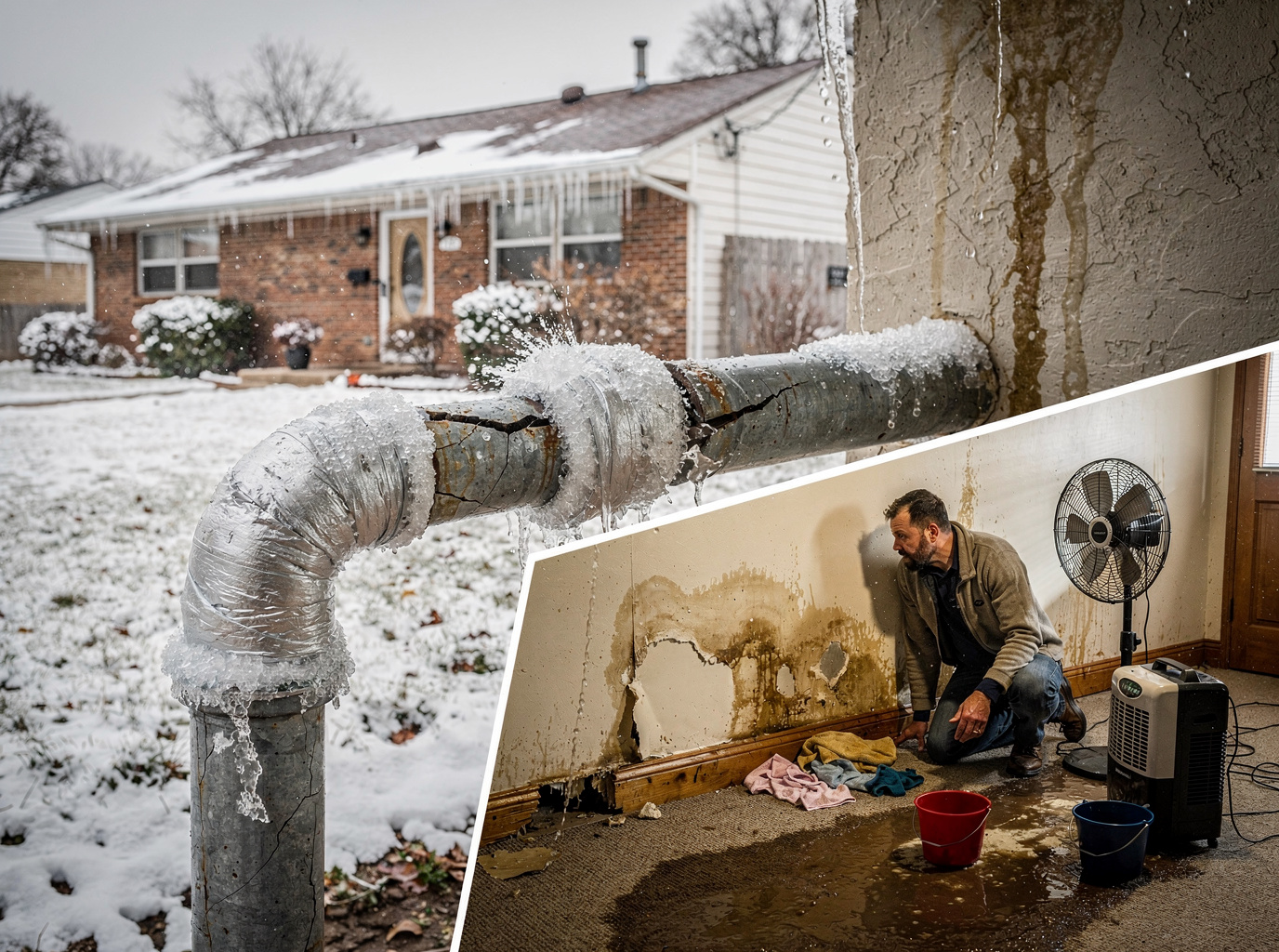
In Wichita, when winter temperatures drop below 15°F and hold for more than a few hours, pipes in uninsulated exterior walls or crawl spaces typically freeze within 4 to 12 hours and burst once thawing begins, especially in pre-1970 homes found throughout Riverside, Delano, and College Hill.
Sedgwick County Winter Conditions and Pipe Vulnerability
Wichita experiences prolonged stretches of sub-freezing weather each January and February, with overnight lows often reaching single digits. These conditions hit older housing stock hardest because many homes in Old Town, Eastborough, and Planeview still rely on galvanized or copper lines run along exterior walls without modern insulation. Cold air infiltrates crawl spaces and attics quickly when winds pick up across the flat terrain of Sedgwick County. Homes in nearby Park City and Bel Aire share the same exposure because they sit on similar slab or pier-and-beam foundations built before widespread use of PEX tubing. The freeze-thaw cycle expands water inside pipes until joints or straight runs crack, releasing water once temperatures climb above 32°F.
Typical Burst Locations in Wichita Neighborhoods
Bursts most often appear where pipes run through unheated garages, under kitchen sinks against north-facing walls, or in laundry rooms on slab edges. In College Hill and Delano, narrow lots place supply lines close to foundation perimeters that lose heat fastest. Derby and Maize homes built in the 1960s show similar patterns because their crawl spaces lack vapor barriers and insulation under floor joists. Water then migrates into finished basements or hardwood floors within hours of thawing. These locations require targeted drying because moisture travels along subfloor seams and into wall cavities before visible signs appear.
Immediate Consequences and Water Spread
Once a pipe bursts, water can release 5 to 10 gallons per minute until the main is shut off, soaking carpet, drywall, and insulation. In humid conditions that sometimes follow a cold snap, secondary mold growth begins within 48 hours on wet cellulose materials. Homeowners in Eastborough and Old Town frequently discover ceiling stains on the floor below because multi-story homes allow water to travel through plumbing chases. The sudden release also stresses nearby joints, creating additional leaks that extend damage into adjacent rooms.
Water Damage Restoration Process After a Burst
Technicians begin with moisture mapping using infrared cameras to locate hidden saturation in walls and floors. Extraction removes standing water, followed by drying with commercial dehumidifiers and air movers sized for the square footage affected. In many Wichita cases, affected drywall must be removed 12 to 18 inches above the water line to prevent mold behind baseboards. Water Damage Restoration crews then sanitize surfaces and apply antimicrobial treatments before reconstruction. Water Damage Cleanup focuses on contents removal and drying of personal items to limit secondary damage.
Prevention Steps for Future Wichita Winters
Homeowners can insulate exposed pipes with foam sleeves rated for 20°F or lower and install heat tape on vulnerable runs in crawl spaces. Keeping cabinet doors open under sinks allows warm air to circulate around pipes during cold nights. Replacing older galvanized lines with PEX during remodeling reduces future risk because the material expands slightly under pressure. Checking for drafts around sill plates in Riverside and Delano homes before December helps maintain consistent temperatures near plumbing. Monitoring weather forecasts for extended cold snaps allows proactive steps such as dripping faucets on the home's north side.
Typical Costs and When to Call Professionals
Repair and drying expenses after a frozen pipe burst commonly range from $1,200 to $4,500 depending on the number of affected rooms and whether structural materials require replacement. Typical Water Damage Restoration Costs in Wichita Kansas outlines line-item breakdowns for extraction, drying, and rebuild phases. Acting within the first 24 hours limits mold risk and keeps costs lower because moisture has less time to penetrate subfloors and cabinets.