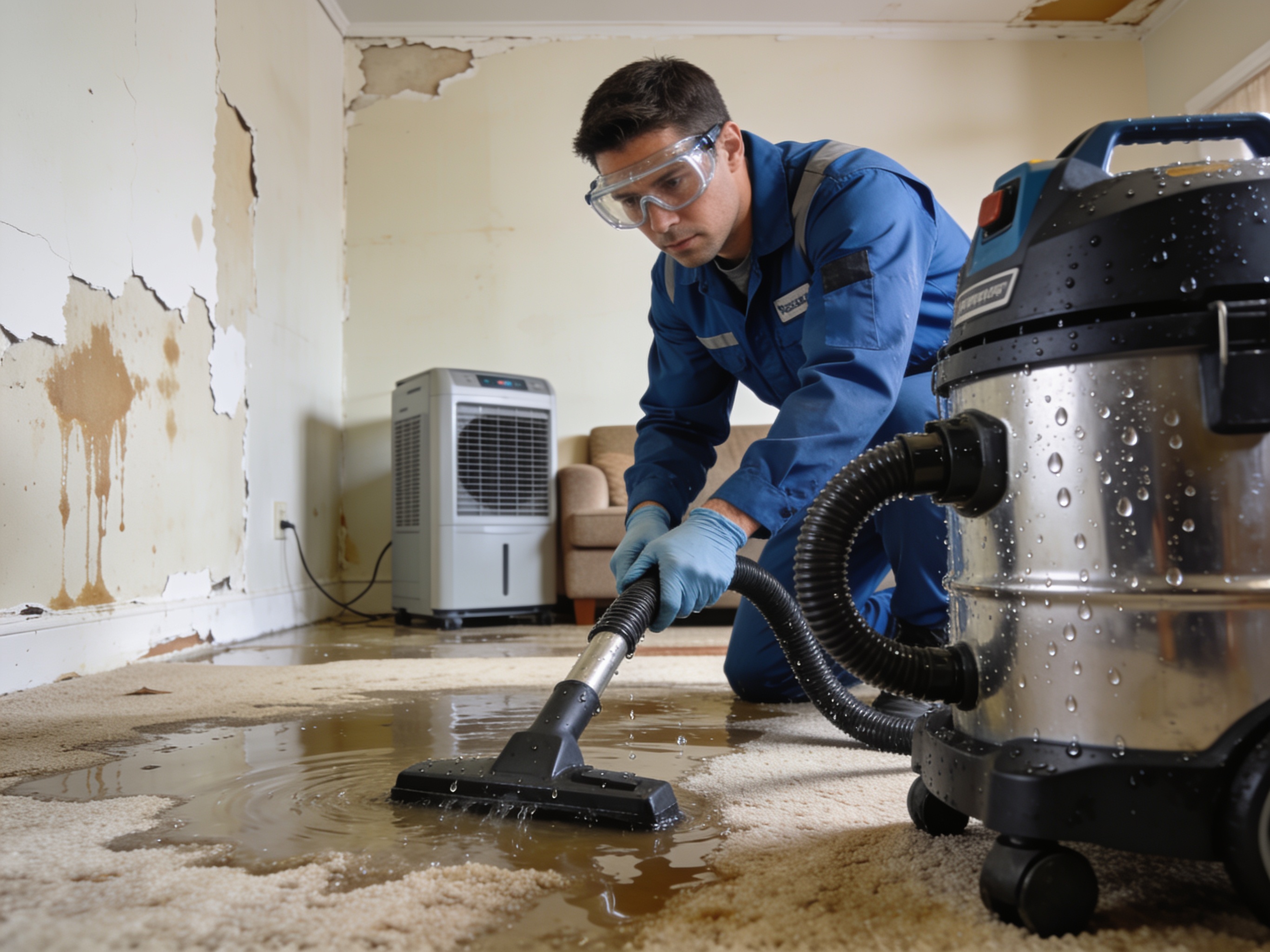
Valley Center sits north of central Wichita along Meridian Avenue with a mix of 1960s ranch homes and newer subdivisions near Valley Center High School. When summer storms dump heavy rain or winter freezes hit copper lines, water finds its way into crawl spaces and slab edges common on these lots. We reach the area quickly via K-96 and work on properties bounded by Park Avenue and the railroad tracks where drainage often backs up into garages and utility rooms.
Our crews based at 7707 E Osie St know the flat Sedgwick County terrain means water spreads wide instead of running off, especially around the schools and city park. We extract standing water from basements along West Street and dry wall cavities in homes built before modern vapor barriers. Cold snaps bring frozen supply lines that burst under older concrete, while humid July air slows drying and raises mold risk in Valley Center attics.
Homeowners in Valley Center call us for both sudden leaks and gradual seepage after heavy rains near the Little Arkansas River corridor. We set up containment along Meridian corridors and monitor moisture in the clay-heavy soil that holds water longer than sandy lots farther east.
Around Valley Center
We regularly work near:
- 📍Valley Center High School
- 📍Valley Center City Park
- 📍Meridian Avenue
- 📍Valley Center Middle School
- 📍Park Avenue
Water Damage Restoration in Valley Center — Local Notes
- •Flat lots along Meridian Avenue and near Valley Center City Park let rainwater pool against foundations for days after storms, requiring deeper extraction than sloped Wichita neighborhoods.
- •Many 1960s-1970s ranch homes on the west side of Valley Center have slab-on-grade construction with copper supply lines that split during January freezes, pushing water under tile and into adjacent rooms.
- •Tornado season brings roof breaches and window failures that soak insulation in attics; the high humidity afterward keeps drywall wet longer, so we run extra air movers on jobs near Valley Center High School.
- •Access to homes east of the railroad tracks can be slowed by standing water on Park Avenue, so we stage equipment on higher ground and use longer hoses to reach affected bedrooms and utility rooms.